
SEADOTs at European Maritime Day 2026
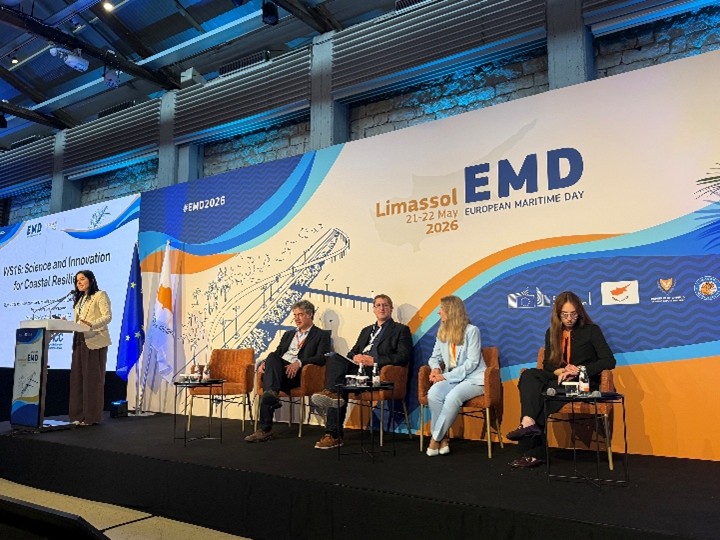
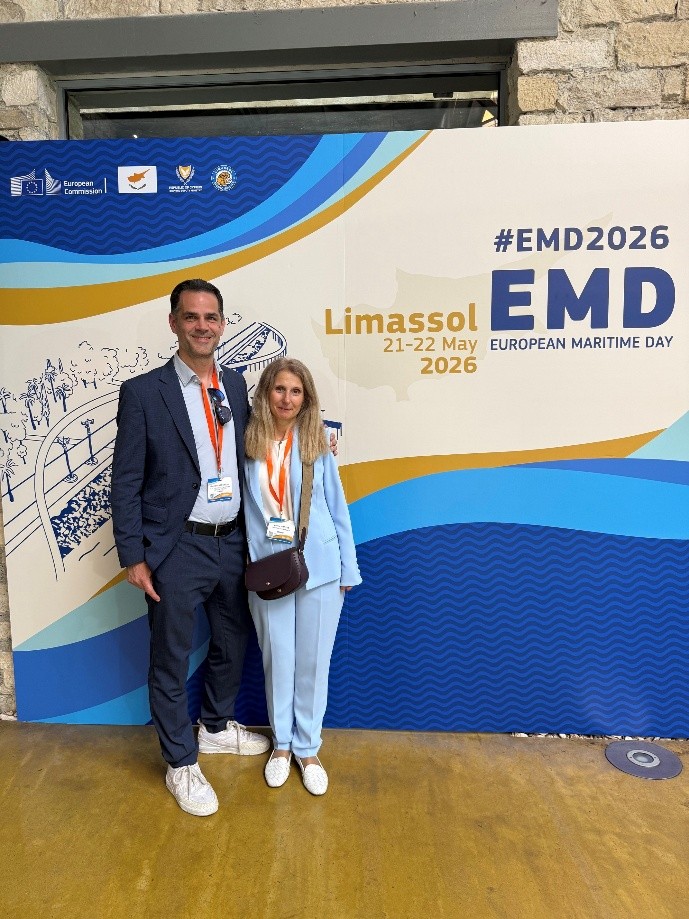
The SEADOTs project was represented at the European Maritime Day (EMD) 2026 by Joanna Stavneva (HEREON) and Harald Hasler-Sheetal (ICES), who participated in discussions addressing some of the most pressing challenges and opportunities facing Europe’s oceans, fisheries, aquaculture, blue economy, and ocean governance.
Throughout the event, a recurring theme emerged across multiple sessions: ocean management decisions are becoming increasingly complex. Growing environmental pressures, competing uses of marine space, and the need to balance ecological, social, and economic objectives are creating new challenges for policymakers and stakeholders alike.
 Discussions on fisheries and aquaculture highlighted the importance of adopting more ecosystem-based and adaptive management approaches. As climate change continues to alter marine ecosystems, coastal communities and marine industries must adapt to rapidly changing environmental conditions while maintaining sustainability and resilience.
At the same time, many sessions focused on the challenge of balancing marine protection, sustainable resource use, economic development, and spatial planning in increasingly crowded marine environments. These discussions underscored the need for integrated approaches that can support informed decision-making across sectors and governance levels.
This is precisely where the SEADOTs project contributes. By developing Digital Ocean Twin applications that combine ecological, social, and socio-economic data, SEADOTs aims to provide policymakers and stakeholders with advanced tools to explore future scenarios, assess trade-offs, and support evidence-based marine spatial planning and ocean governance decisions.
As Europe continues to advance its ambitions for healthy oceans and sustainable blue growth, initiatives such as SEADOTs will play a key role in supporting more integrated, transparent, and forward-looking ocean management.